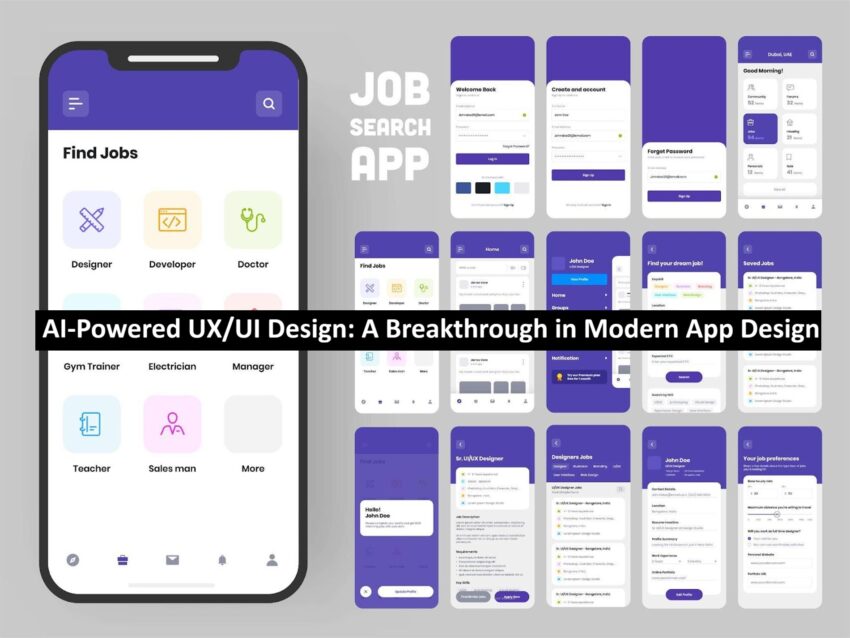
AI-Powered UX/UI Design: A Breakthrough in Modern App Design
In the world of digital innovation, user experience (UX) and user interface (UI) design define how people interact with technology. As users demand faster, smarter, and more intuitive experiences, traditional design methods are no longer enough. The introduction of Artificial Intelligence (AI) into design workflows has revolutionized how apps are conceived, designed, and optimized.
AI-powered UX/UI design is not just about automation, it’s about creating intelligent, data-driven, and adaptive user experiences that respond to user behavior in real time. From layout generation to predictive personalization, AI is reshaping the design process and setting new benchmarks for creativity and usability.
The Evolution of App Design and the Rise of AI
The journey of app design has evolved from static, template-based layouts to dynamic, user-centric systems. In the early days, designers relied heavily on manual processes such as wireframing, prototyping, and A/B testing. While these methods remain essential, they often consume significant time and resources.
With AI integration, this paradigm has shifted. AI algorithms can now analyze massive datasets, predict user behavior, and generate personalized design recommendations. Modern design tools like Figma, Adobe XD, and Sketch have integrated AI plugins that assist in real-time decision-making suggesting color palettes, improving accessibility, and even writing UX copy.
In 2025 and beyond, AI in UX/UI design is not a futuristic concept; it’s an essential component of every mobile app development and digital product design strategy.
Read: Unclogging the Freight Pipeline: Solutions for Supply Chain Delays
How AI is Transforming UX/UI Design Workflows
AI doesn’t replace designers, it empowers them. By handling repetitive and data-heavy tasks, AI allows human designers to focus on creativity, storytelling, and innovation. Let’s explore how AI transforms every stage of the UX/UI design workflow.
1. Automated Wireframing and Layouts
AI tools can generate wireframes and layouts based on simple user prompts or existing design patterns. These systems analyze previous designs, project goals, and brand guidelines to create intelligent blueprints that align with usability principles.
2. Smart Prototyping
Instead of building prototypes manually, AI-powered systems can auto-generate interactive models that simulate user interactions. Designers can instantly test and iterate on design changes, significantly reducing time-to-market.
3. Predictive Design Adjustments
AI models trained on user data can predict where users are most likely to click, scroll, or drop off. These insights help designers make informed decisions about element placement, button size, and navigation flow.
4. AI-Assisted Accessibility
AI ensures inclusivity by identifying accessibility issues like poor contrast ratios, font readability, or layout inconsistencies. This leads to universally usable designs that meet accessibility standards such as WCAG 2.1.
5. Real-Time User Feedback Integration
AI can analyze user interactions in real time and adjust the UI dynamically for instance, by rearranging content blocks, resizing visuals, or changing color tones based on engagement data.
By combining human intuition with AI precision, design teams can create products that are smarter, faster, and more user-adaptive than ever before.
Personalization: The Core of AI-Powered UX
Personalization has always been a goal in UX, but AI has elevated it to new heights. Instead of relying on broad demographic data, AI allows designers to tailor every element of the interface based on real-time user behavior, preferences, and context.
Modern apps use machine learning algorithms to analyze usage patterns, browsing history, and even emotional responses. This enables dynamic personalization, where the interface evolves as the user interacts with it.
For example, a health and fitness app might modify workout suggestions based on daily activity levels, while an eCommerce app can adjust product displays depending on the time of day, location, or past purchases.
AI-driven personalization ensures that each user feels like the app was designed specifically for them — creating deeper engagement and longer retention.
AI in Visual Design and Branding
Visual consistency is a cornerstone of effective UI design, and AI has made it easier to maintain brand integrity across every platform. AI-driven design tools now assist with color theory, layout harmony, and visual balance.
Designers can use AI models to generate unique color schemes aligned with brand emotion or even simulate how colors will appear in different lighting environments. AI-based tools like Khroma and Designify use deep learning to suggest aesthetic combinations that enhance brand identity while maintaining usability.
Moreover, AI image generation tools such as Midjourney and DALL·E helps designers produce unique visual assets, icons, and backgrounds in seconds. This reduces dependency on stock imagery and speeds up the creative process.
The result is a cohesive, brand-aligned, and visually engaging experience that resonates with users and elevates design quality across all digital touchpoints.
Data-Driven Decision-Making in Design
Traditionally, design decisions were based on intuition, creative vision, or limited usability testing. Now, AI brings data-driven intelligence into every phase of UX/UI design.
AI-powered analytics tools evaluate how users interact with different design elements tracking clicks, hover times, bounce rates, and navigation flows. These insights allow designers to make objective improvements rather than relying solely on subjective opinions.
For instance, if AI detects that users frequently abandon a form at a specific step, designers can adjust the flow to simplify that process. If users engage longer with certain colors or layouts, AI identifies those correlations and applies them to future iterations.
This combination of quantitative data and creative design results in highly optimized, conversion-oriented experiences that evolve continuously based on user behavior.
Enhancing User Testing and Iteration with AI
User testing is an essential part of UX design, but it’s traditionally time-consuming and resource-intensive. AI simplifies and accelerates this phase by automating usability tests and simulating real-world interactions.
AI tools like Lookback, Maze, and UXCam can record user sessions, analyze gestures, detect frustration signals, and even provide sentiment analysis. These tools give designers actionable feedback faster, helping them iterate efficiently.
Moreover, AI can simulate thousands of test scenarios instantly, allowing teams to identify potential usability issues before human testers even interact with the product. This predictive usability testing saves weeks of effort while improving the final design’s reliability and performance.
The Future of AI in UX/UI Design
The future of AI in UX/UI design looks incredibly promising. As AI models continue to evolve, we’ll see fully adaptive interfaces that reconfigure themselves dynamically based on context and intent.
Imagine an app that automatically changes its layout depending on whether you’re driving, working, or relaxing. Or a shopping platform that anticipates your needs before you even search. This is where AI-driven UX design is heading toward hyper-personalization and context-aware interfaces.
Additionally, Generative AI will continue to streamline design creation. Tools will soon be able to generate complete app prototypes from a simple text prompt, reducing months of work to days. This doesn’t eliminate human designers, it amplifies their creativity, enabling them to focus on empathy, storytelling, and strategic vision.
In the coming years, AI and design will coexist as creative partners, revolutionizing how users experience digital products and how brands deliver value through design.
Conclusion
AI-powered UX/UI design represents a transformative leap in how digital experiences are created and refined. By blending human creativity with machine intelligence, businesses can craft apps that are not only visually stunning but also adaptive, predictive, and deeply user-centered.
As technology advances, companies that embrace AI-driven design processes will lead the market with intuitive and data-backed products that users love. To bring these intelligent, high-performing designs to life, partnering with a professional agency offering expert mobile application design services ensures your app stands out with innovation, usability, and scalability in the evolving digital landscape.